Stop Looking at "Pretty" Reports: The 5 KPIs That Actually Control Restaurant Costs
Most restaurant owners don’t have a "cost problem"—they have a visibility problem. They know the numbers are off, but they can’t pin it down to a specific invoice, a specific supplier, a specific dish, or even a specific branch.
A truly "best-in-class" cost report isn't about cramming 50 metrics into a monthly PDF. It’s about creating a common language for the owner, manager, chef, and accountant so they can see the same reality and fix it that same day.
If you have to wait until next month’s closing to realize your gross margin dropped 3 points, you’ve already missed the window to save your profit. The most valuable metrics aren't found in accounting textbooks; they live in the gap between daily purchasing, receiving, prep, and sales.
A Good Metric Drives Action, Not Just Analysis
Before adding a number to your dashboard, ask yourself: Can my team act on this today? A high-impact metric needs three things:
- Alignment: Everyone calculates it the same way.
- Frequency: Ideally, you’re looking at it daily.
- Accountability: If the number is "red," the team knows exactly who needs to fix it.
The Golden Rule: Monthly reports are for reviews; daily reports are for damage control. Use daily reports to catch spikes, weekly reports to spot trends, and monthly reports to make big-picture strategic decisions.
The 5 Core Metrics Every Restaurant Needs
1. Food Cost Percentage (COGS %)
This is the baseline, but it’s often misunderstood. If your food cost is high, don’t just jump to squeezing your suppliers. High COGS can be caused by waste, inconsistent portioning, or "off-the-books" comps.
- Pro Tip: Don’t just look at the total. Break it down by category (Proteins, Produce, Bar, etc.). If your seafood cost jumps 8% while everything else is stable, you know exactly where to renegotiate or adjust your menu pricing.
2. Actual vs. Theoretical Cost (The "Variance")
This is arguably more important than the food cost itself. Theoretical Cost is what you should have spent based on your recipes and POS data. Actual Cost is what you actually spent based on inventory and invoices.
- The gap between them is where the truth hides. If the variance is high, the problem isn't the market—it’s over-portioning, theft, unrecorded waste, or sloppy inventory counts.
3. Purchase Price Volatility
Margins don’t always die because of bad sales; sometimes they die because you’re paying too much without realizing it.
- Stop relying on "gut feelings" about market prices. Track price fluctuations by supplier and SKU. If a core ingredient jumps 5% in a week, your system should flag it immediately so you can find an alternative or adjust your specials before the profit disappears.
4. Waste and Shrinkage
Expired stock, prep errors, and "forgotten" waste logs are silent profit killers.
- The key is to track waste by category. You can't expect the same waste percentage for leafy greens as you do for frozen goods. Management should focus on abnormal waste—the spikes that signal a breakdown in kitchen discipline.
5. Daily Estimated P&L (The "Daily Flash")
The most important question every owner has is: "Did we make money today?"
- You don't need "accounting-grade" precision here. You need a daily snapshot of sales vs. estimated labor and food spend. If you see three days of "thin" profits despite high sales, you can catch the leak before it becomes a month-long disaster.
Why Most Reports Fail (Hint: It’s the Data)
You can have the best KPIs in the world, but if your data is scattered across WhatsApp messages, paper delivery notes, Excel sheets, and a POS system, your reports will always be late and probably wrong.
In the restaurant world, the bottleneck isn't the analysis—it’s the data entry. If your team is manually reconciling piles of paper, they aren't managing costs; they’re just doing data entry.
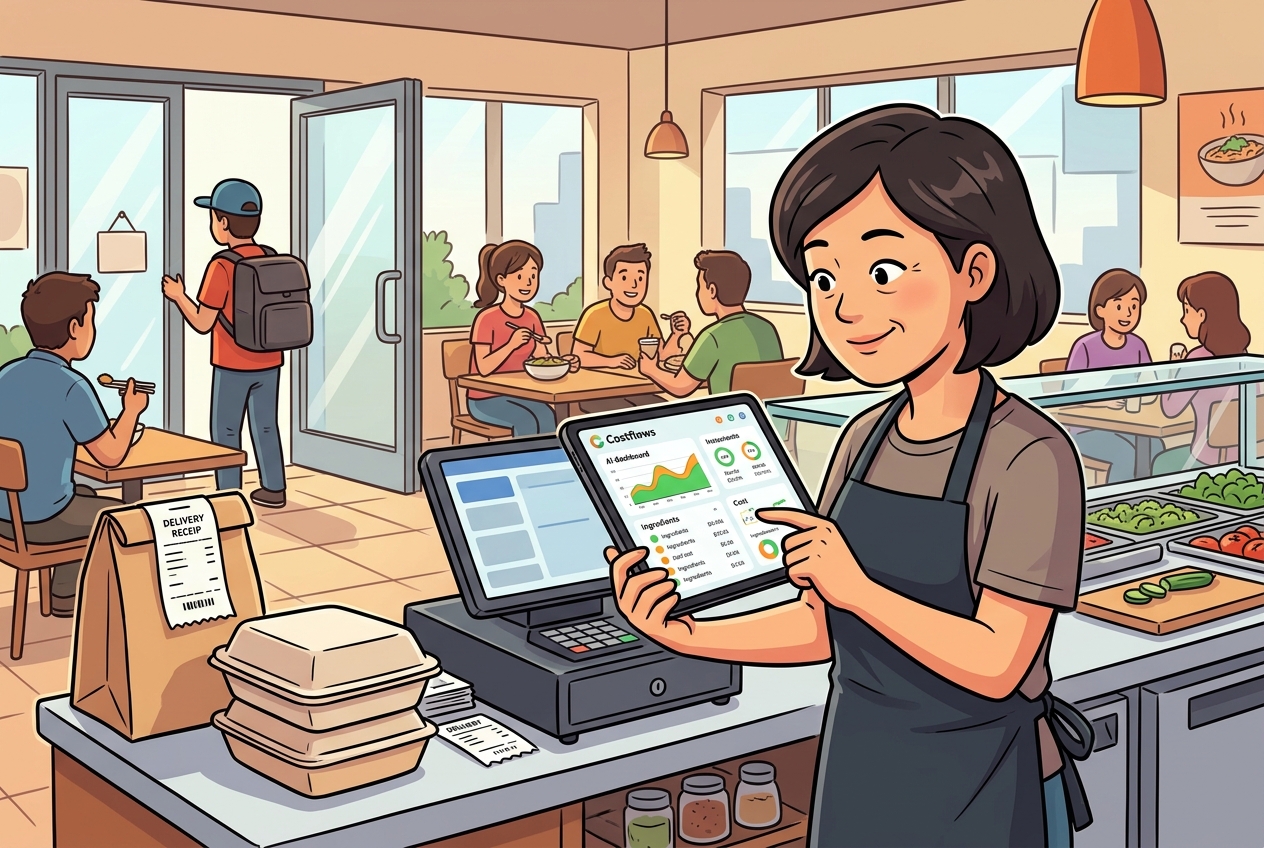
To make cost control work, your invoices, inventory, and menu costs need to live in one "source of truth." This is why systems like Costflows are game-changers. By automating the capture of invoices and linking them to daily inventory and sales, you turn reports from "post-mortems" into "active coaching tools."
The Bottom Line
Profit isn't something that happens at the end of the month. It’s something you protect every single morning.
Start by picking the metrics that actually drive action for your current size. Whether you’re a single mom-and-pop shop or a 20-unit chain, the goal is the same: See it faster, fix it sooner. Profit is won or lost one invoice at a time.
.png)

訂閱最新消息
不要錯過任何餐飲的資訊