Late-night restocking, morning deliveries, lunch rushes, and evening bookkeeping—for many restaurants, the core issue isn't just being busy; it's that every single step relies entirely on manual effort to keep things from falling apart. You might think the debate is simply "Procurement Management System vs. Traditional Ordering," but the real question is whether your restaurant can seamlessly connect purchasing, inventory, invoices, costs, and profits into a single, traceable management chain.
In the F&B industry, traditional ordering is never just "sending a WhatsApp to the supplier." It is usually a messy web of paper invoices, Excel spreadsheets, chat histories, handwritten adjustments, phone confirmations, manual receiving checks, and a frantic month-end accounting crunch. On the surface, the process seems to work. But in reality, with every new branch, storage room, or supplier you add, the errors, missing orders, price fluctuations, and inventory discrepancies multiply.
If you are a single-store owner, the problem is usually fragmented time. Who placed the order today? Who changed the quantity tomorrow? Who received the goods? By month-end, it’s a guessing game. If you run a chain or a central commissary kitchen, the problem is even more direct: different branches order the exact same ingredient using different specifications, purchase prices are opaque, and waste is untraceable. Management is left completely blind as to which branch is eating away the gross margins.
The Real Difference Isn't Just "Going Digital"
When many restaurateurs first encounter a procurement system, they assume it just means "putting paper forms onto a phone." That’s only scratching the surface. The true difference is that traditional ordering records actions, while a procurement system records data relationships.
The core of traditional ordering is communication. Who places the order? It relies on experience. Who do they send it to? It relies on contact lists. Is the price right? It relies on memory. Are there discrepancies upon delivery? It relies on the receiver’s on-the-spot judgment. It’s not that this process doesn’t work, but it relies heavily on veteran staff. The moment a store manager goes on leave, a purchasing agent resigns, or a supplier quietly raises prices, the entire chain starts to crumble.
The core of a procurement management system, however, is standardization. Item names, specifications, units, suppliers, historical pricing, standard order cycles, branch permissions, approval workflows, receiving variances, and inbound logs all flow through a single structured system. The value here isn't just looking "tech-savvy"—it’s ensuring every single order can be reviewed and every anomaly can be instantly located.
This is exactly why many restaurants see their revenue grow as they expand, but their profits stay flat. It’s not because they aren't selling enough; it’s because their back-office cost management is still stuck in the manual era.
The 4 Hidden Costs of Traditional Ordering
Let’s start with the most underestimated one: manual labor time. Store managers, chefs, warehouse staff, and accountants all handle procurement data, yet none of them exclusively do purchasing. Everyone spends 10 to 15 extra minutes a day checking orders, re-entering data, and verifying invoices. This adds up to a massive amount of administrative hours that rarely get factored into your operational costs.
The second issue is price creep. In a traditional workflow, supplier price hikes rarely trigger an immediate warning. It isn't until the month-end reconciliation that you realize beef, seafood, cooking oil, and sauces have been marked up for weeks. It’s not that you aren't doing purchasing; you just lack real-time monitoring.
The third problem is invoice reconciliation. When purchase orders, delivery notes, invoices, and inbound logs are scattered across paper, WhatsApp, and Excel, your accountant has to cross-check them line by line to process Accounts Payable (AP). As invoice volume grows, missing records, double entries, and mismatched numbers become the daily norm.
The fourth issue is distorted inventory. Theoretically, what you bought minus what you sold should equal what you have left. But if ordering, receiving, usage, transfers, and waste aren't tracked in the same system, your inventory numbers become a game of "close enough." And in the F&B industry, "close enough" is exactly what kills profit margins.
How a Procurement System Turns Workflows into Actionable Data
A truly F&B-focused procurement system shouldn't just help you place orders—it should automatically transform frontline actions into actionable back-office data.
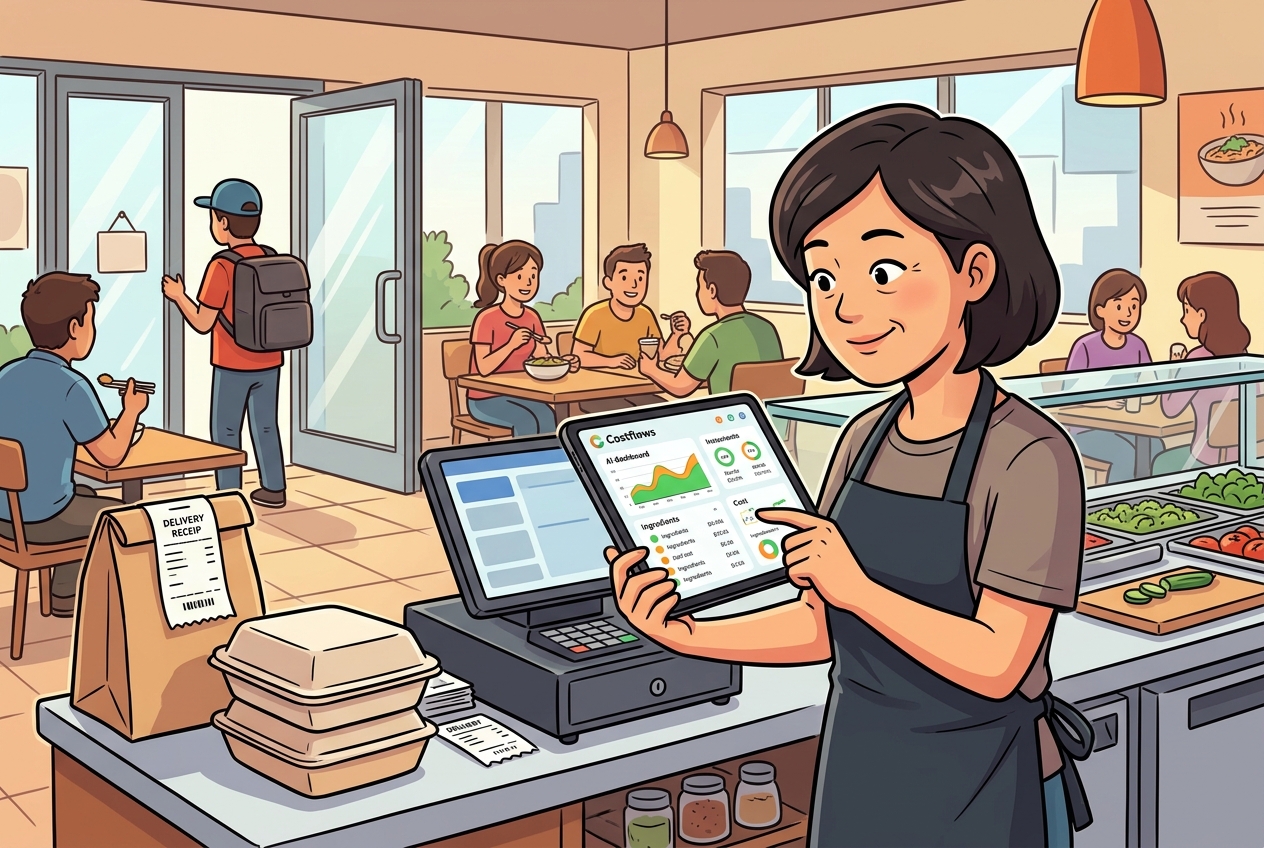
For example, when a store manager places an order via mobile, the system automatically organizes it by supplier, category, and branch needs. When the supplier sends the invoice, the system extracts the data. Upon delivery, the system logs the actual received quantity and any variances, which are then synced with your inventory and cost accounting modules. Suddenly, purchasing is no longer an isolated chore; it becomes the starting point of your cost analysis.
Management can only talk about "cost control" when the data is connected. You can instantly track how the price of the same ingredient fluctuates across different times, suppliers, and branches. You can spot which stores have abnormal ordering frequencies, which suppliers frequently short-ship, and which items consistently show a gap between theoretical cost and actual usage.
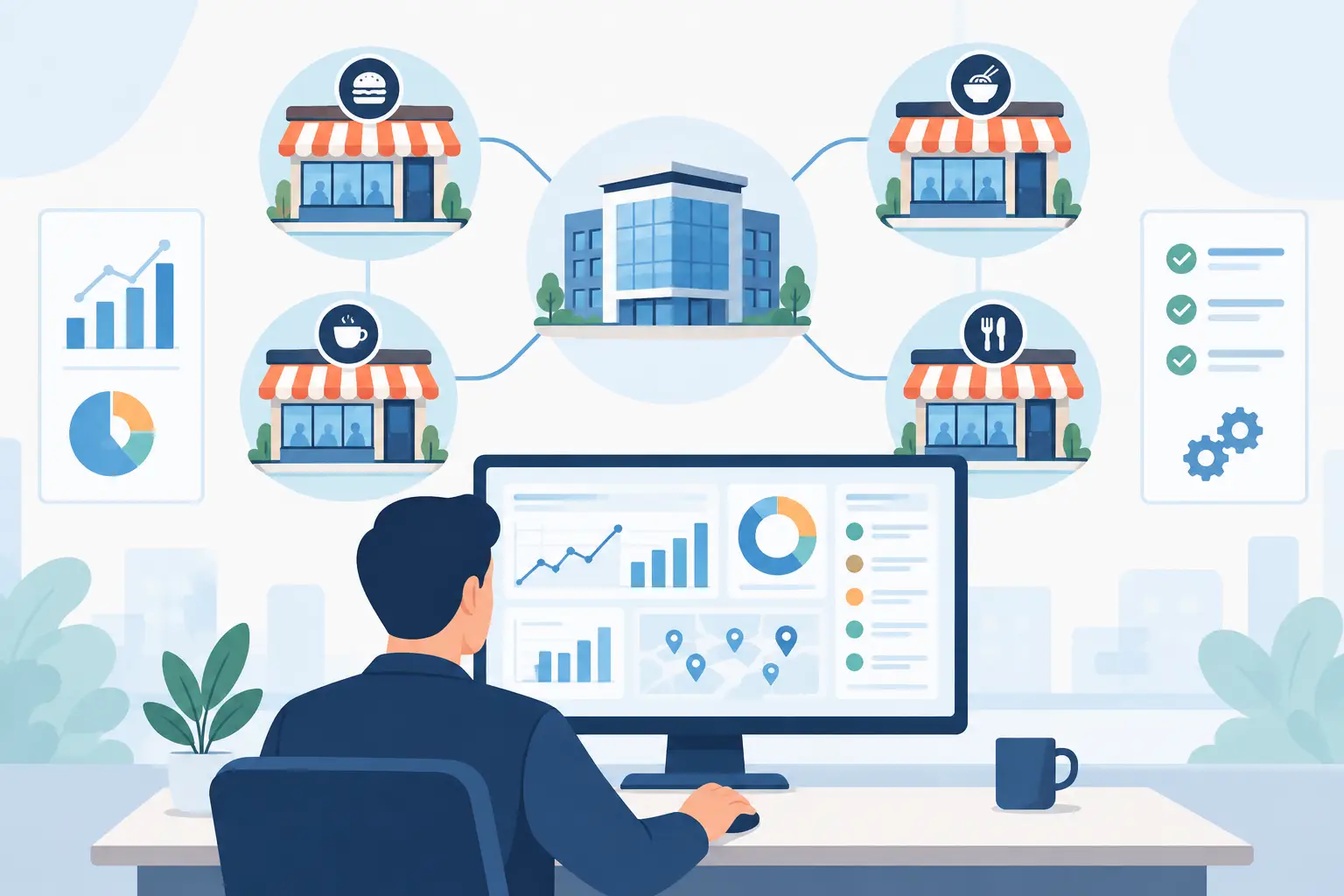
The biggest advantage for your team? Cross-departmental collaboration no longer relies on word of mouth. The manager handles the order, the head chef monitors specs and yield, the accountant tracks AP and invoices, the owner watches the gross margin, and the central kitchen plans production. Information that used to be scattered is now perfectly aligned under one unified logic.
What Metrics Should Restaurants Actually Care About?
First, look at speed—but not just ordering speed. The real metric is how much manual effort it takes to go from "creating a purchase request" to "generating reconcilable, analyzable data."
Second, look at accuracy. The biggest flaw in traditional ordering isn't that people don't do it; it's that it requires constant fixing. Handwritten notes, vague item names, inconsistent units, and miscopied prices throw your inventory and accounting entirely off track. If a system can combine automated invoice capture, data extraction, and easy manual verification, its value far exceeds a simple electronic order form.
Third, look at traceability. F&B operations always require last-minute changes. The issue isn't that changes happen; it's whether those changes leave an audit trail. Who adjusted the quantity? Why? What was the receiving variance? What was the final AP amount? All of this must be trackable.
Finally, look at business results. A procurement system isn't just for making the back office look neat; it’s designed to lower food costs, control waste, speed up reconciliation, and clarify gross margins. If a system only records data but cannot analyze it, it will struggle to truly replace traditional methods.
When Is Traditional Ordering Still "Good Enough"?
If you only run one small restaurant, have a low SKU count, use stable suppliers, the owner is on-site every day monitoring purchases, and your monthly invoice volume is low, the traditional method can still work in the short term. In the early days of a startup, the priority is getting the business running, not necessarily digitizing everything on day one.
But there is a catch: you must accept that your entire operation depends on a few specific people. The moment the business gets complex or staff turnover increases, the cost of traditional methods doesn't rise slowly—it spikes overnight. Many restaurant owners only realize their old workflow is broken after they open their second or third location.
The question isn't "Is a system worth it?" but rather "At what stage do you want to stop relying on sheer willpower and guesswork?" The longer you wait, the messier your historical data gets, and the harder the transition becomes.
The Best F&B Systems Aren't Feature-Heavy; They Are Fast to Adopt
Restaurant teams usually hate complex IT projects. They want something ready to use, easily adopted by the frontline, and robust enough for the back office.
Therefore, a strong procurement management system must meet real-world conditions. First, you must be able to order, receive, and count stock purely on a mobile phone without extra hardware. Second, it must handle real-world documents—handwritten notes, photos, and varying invoice formats. Third, purchasing, inventory, costing, and profit analysis must be linked, not isolated in separate spreadsheets. Fourth, it should ideally integrate with your POS and accounting software so daily sales, usage, AP, and estimated P&L can sync effortlessly.
This is exactly where an AI platform built for F&B operations, like Costflows, shines. It doesn't treat purchase orders as an isolated module. Instead, it places AI invoice capture, procurement workflows, inventory management, recipe costing, supplier performance, and daily P&L into a single operational framework. For management, this integration is far more practical than standalone features because it directly impacts profit management.
Especially when a system can monitor price fluctuations, compare theoretical vs. actual costs, and generate trackable supplier performance reports, purchasing is no longer just about "getting the goods." It becomes about "using data to decide who to buy from, how much to buy, and when to switch." That is the level of management intensity restaurant procurement actually needs.
Many owners worry that adopting a system will slow down their operations. The reality is usually the exact opposite. What actually slows down your restaurant is repetitive data entry, endless double-checking, month-end accounting catch-ups, and untraceable inventory variances. Once you institutionalize these steps, your team will actually breathe easier because everyone knows exactly what data to input and when.
Restaurant profits aren't built on saving a few dollars during one negotiation; they are built by clearly seeing the daily relationship between your spending, inventory, pricing, and margins. Whether you choose a Procurement Management System or stick to Traditional Ordering today won't just decide if your workflow looks modern—it will decide if you can still keep your profits in your own hands as your business scales.
.png)

訂閱最新消息
不要錯過任何餐飲的資訊