Under the twin pressures of severe hospitality labor shortages and ever-rising raw ingredient costs, digital transformation is no longer a "nice-to-have"—it has become a baseline requirement for restaurant survival and expansion. Among the many restaurant tech solutions on the market, MaiFood and Costflows are two of the most talked-about platforms.
Yet, many restaurant owners and procurement managers often find themselves asking: "What’s the actual difference between MaiFood and Costflows? If I want to streamline inventory and purchasing, which one should I invest in?"
In this guide, we’ll break down the core strengths, distinct positioning, and best-fit scenarios for both platforms—helping independent eateries and multi-unit restaurant chains make the smartest tech decisions.
⚡ The 1-Minute Executive Summary: Which One Should You Pick?
- Choose [MaiFood] if your top priority is Front-of-House (FOH) revenue growth and labor efficiency. If you need a cloud POS, LINE online ordering, table-side QR code ordering, third-party delivery integration, and customer loyalty marketing tools, MaiFood will help maximize table turnover and streamline front-end order fulfillment.
- Choose [Costflows] if your main pain point is Back-of-House (BOH) cost control and plugging profit leaks. If you need intelligent AI receipt/invoice scanning (OCR), real-time dynamic recipe costing (BOM), digital supplier ordering, automated inventory depletion, and centralized HQ management, Costflows eliminates manual paperwork and roots out hidden losses on every dish.
- 💡 The Ultimate Combo (Best of Both Worlds): Run MaiFood at the front counter for seamless POS transactions and customer retention, while integrating Costflows on the backend for supply chain procurement, inventory tracking, and gross margin analysis. This creates a complete end-to-end ecosystem: front-end drives top-line revenue, back-end protects bottom-line profit.
1. Core Positioning: MaiFood Drives Revenue, Costflows Protects Profit
1. MaiFood: Focused on Front-of-House Operations & OMO Omnichannel Sales
Developed by Taiwan’s MaiFood Network, its core strength lies in streamlining first-line ordering, checkout, and guest interactions:
- Cloud POS & Multiple Payment Methods: Integrates dine-in, takeout, and electronic invoicing seamlessly.
- LINE Online Ordering & Member Loyalty: Converts walk-ins and delivery patrons into your private LINE loyalty community.
- Table-side QR Code Ordering & KDS: Allows guests to self-order while the kitchen receives tickets digitally in real time, significantly reducing floor staff workloads.
- AI-POS Marketing Tools: Uses consumer insights to automatically send targeted discount coupons and boost repeat visits.
2. Costflows: Focused on Supply Chain, Food Costs & Profit Management
Tailor-made for restaurants, Costflows tackles the classic industry headache: "Sales look great on paper, but where did all the profit go at the end of the month?"
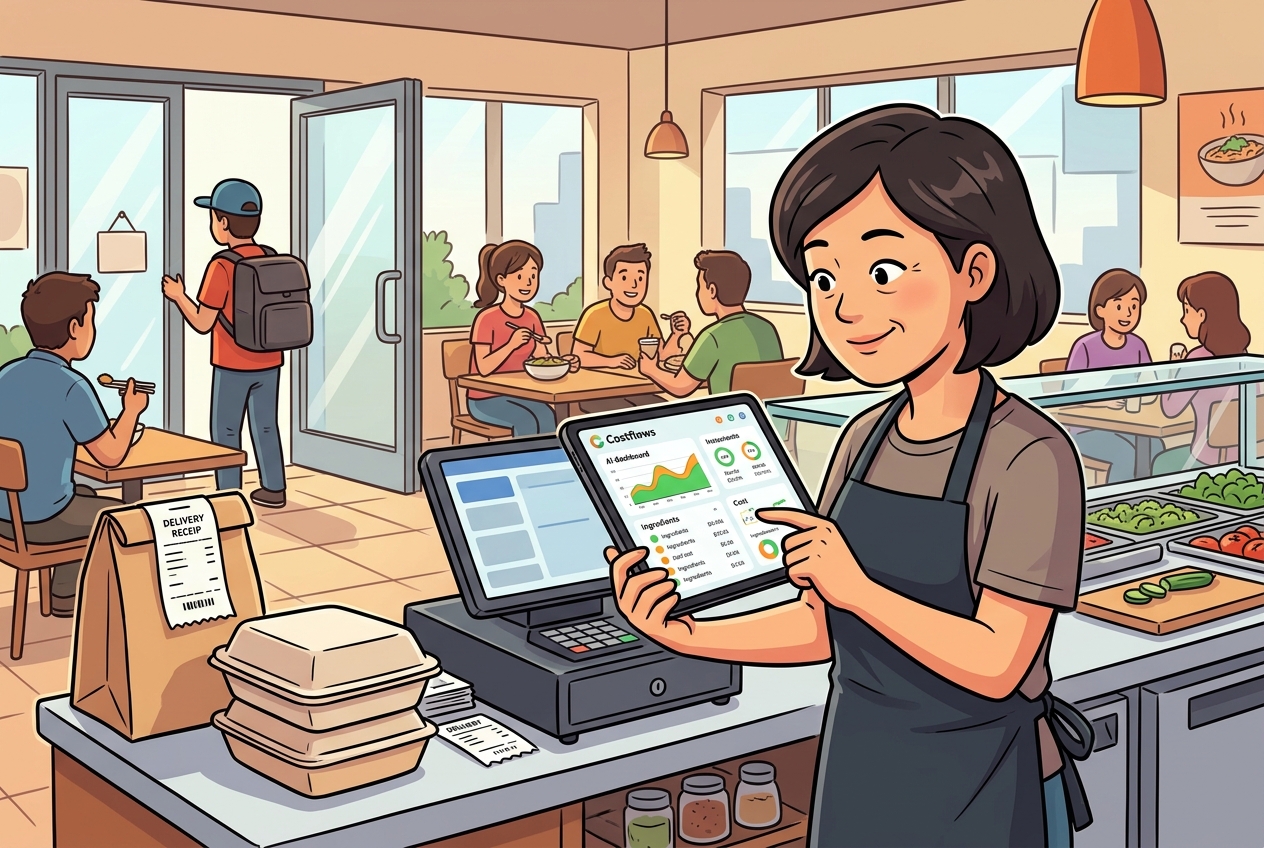
- AI Document & Invoice OCR: Take a quick photo of handwritten invoices, delivery slips, or receipts—AI extracts item names and unit prices in seconds, eliminating manual data entry.
- Dynamic Recipe (BOM) Costing: Automatically recalculates dish-level gross margins whenever supplier ingredient prices fluctuate, instantly flagging unprofitable menu items.
- Smart Inventory & Waste Audits: Syncs with POS sales data to automate ingredient deductions and compares Theoretical Usage vs. Actual Stocktake to pinpoint waste, spoilage, and theft.
- Chain & HQ Management: Simplifies multi-store purchase order approvals, supplier price benchmarking, inter-store stock transfers, and central kitchen production scheduling.
3. Why Costflows is the Smarter Choice for Procurement & Inventory Management
Many restaurateurs wonder: "My POS already has basic inventory tracking—why do I need a dedicated procurement and inventory platform?" When evaluating a comprehensive backend upgrade to replace or complement POS-level inventory tools, Costflows stands out with distinct, specialized advantages:
1. Automated AI Scanning vs. Painful Manual Data Entry
- Standard POS / Basic Modules: Store managers or bookkeepers spend 1–2 hours daily manually typing paper invoices and supplier receipts into Excel or backend forms—a tedious and error-prone chore.
- The Costflows Advantage: Powered by AI document recognition trained specifically on restaurant invoices. Snap a photo of handwritten slips, receipts, or credit memos, and the AI parses line items, specifications, and unit prices in seconds, cutting administrative grunt work by over 80%.
2. Ingredient-Level Dynamic BOM vs. Static Product Tracking
- Standard POS / Basic Modules: Inventory tracking often stops at "selling one iced tea deducts one plastic cup." It cannot account for meat preparation yield losses, multi-step sauce prep, or fluctuating market wholesale prices.
- The Costflows Advantage: Features multi-tiered Dynamic Bills of Materials (BOM). When egg or beef market prices rise, the system instantly recalculates profit margins for every related dish and sends alerts when margins dip below target thresholds, giving you data-backed pricing confidence.
3. Precision Smart Inventory Depletion & Waste Audits
- Standard POS / Basic Modules: Inventory records frequently disconnect from kitchen realities, and missing stock only surfaces during monthly physical counts—with zero trace of what went wrong.
- The Costflows Advantage: Integrates with POS sales data to deduct raw ingredient stock automatically. The platform contrasts Theoretical Usage against Physical Stocktake, quickly identifying whether variances stem from prep prep waste, expired spoilage, or shrinkage.
4. Enterprise-Grade Multi-Store HQ & Supply Chain Ordering
- Standard POS / Basic Modules: Daily ordering typically relies on messy LINE/WhatsApp chat groups or phone calls, leaving headquarters blind to multi-store order volumes and price discrepancies.
- The Costflows Advantage: Delivers a standardized mobile ordering portal where branch managers order from multiple suppliers with one tap. HQ retains full visibility to set approval workflows, compare centralized supplier quotes, manage central kitchen work orders, and coordinate inter-store transfers.
4. Whether Single Store or Multi-Unit Chain: Costflows Protects Your Margins
- For Independent Restaurants & Cafes: Say goodbye to hiring dedicated bookkeepers or burning midnight oil on reconciliations. Costflows lets a single operator manage procurement, invoice digitization, and weekly stock counts effortlessly, revealing exact net profit per dish.
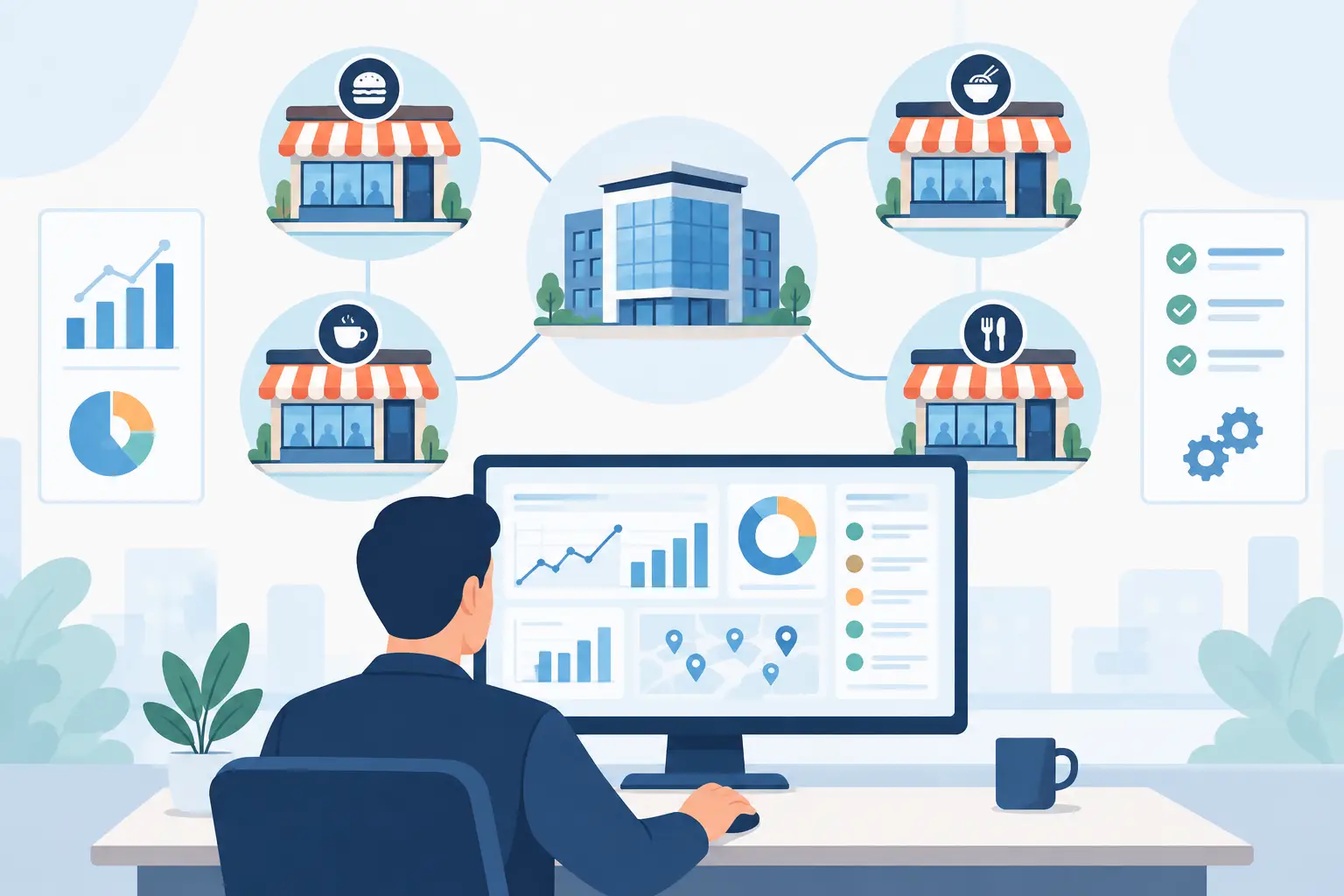
- For Multi-Unit Chains & Franchise Brands: Costflows delivers comprehensive HQ visibility. Whether overseeing 5 or 100+ locations, leadership can monitor raw material cost ratios across all stores in real time, block unauthorized purchases, and leverage consolidated volume data for better vendor negotiations.
❓ Frequently Asked Questions (FAQ)
.png)

訂閱最新消息
不要錯過任何餐飲的資訊