The kitchen hasn't increased portion sizes, and your buying prices don't seem out of control—yet when you look at the numbers at month-end, food costs are up again. This is rarely a single issue. Usually, it's because your stocktake and wastage records aren’t detailed enough, or they aren't connected to your daily operations. You end up with stock coming in, meals going out, and staff writing things down, but management still can't see where the leaks are happening. Your profits are quietly slipping away in these blind spots.
In the restaurant business, stocktakes are never just warehouse chores, and waste logs aren't just kitchen paperwork. They are two halves of the exact same cost-control chain. When purchasing, receiving, transfers, plating, wastage, and inventory counts are handled separately—relying on guesses, verbal notes, or Excel updates in between—your final cost calculations will never be accurate. What you’re looking at isn’t real-time operations; it's a delayed, distorted result.
Why Restaurant Stocktakes and Waste Logs Often Turn Into Busywork
Many restaurants do stocktakes, but they rarely get actual management value out of them. The most common scenario is counting stock just once a month. Front-line staff rush to count items right before closing, scribble numbers on paper, and leave it to an admin or manager to enter them into a spreadsheet later. On the surface, there's a process. In reality, it suffers from three critical issues:
- Severe Delay: By the time you notice an abnormal chicken thigh variance or high oil wastage at month-end, the problem is already four weeks old. You aren’t managing costs; you are just confirming that they got out of hand.
- Coarse Grain Data: Many stocktakes only track "how many cases are left." They don't break down opened packages, prep waste, processing yield, staff meals, recipe testing, or spoilage. Without that level of detail, the numbers won't match up.
- Unclear Accountability: One person notes receiving, another reports kitchen usage, and waste isn't recorded on the spot. When it's time to trace an issue, everyone only remembers "the rough estimate."
These issues are incredibly common, especially in multi-unit brands, chains, or operations with central kitchens. When inventory flows increase, relying solely on paper, WhatsApp messages and Excel simply breaks under the weight of operational complexity.
Effective Inventory Management: It's About Standardization, Not Just Hard Work
If you want your stocktakes and waste logs to actually lower your food costs, the trick isn't telling your team to "write more clearly." It's defining what makes a record actionable, measurable, and trackable.
First, standardize units of measure. If you purchase pork belly in kilograms, prep it in ounces, and count it in "bags" during stocktakes, your conversions will fail. You can keep your buying units, but your inventory system must have a standard stock unit with automated conversion rules. When this is set up correctly, your menu costing, theoretical usage, and actual usage comparisons can finally be compared accurately.
Second, categorize your waste. Normal prep yield, processing waste, spoilage, recipe testing, staff meals, store-to-store transfers, and central kitchen dispatch should not be jumbled into a single number. Each type of waste points to a completely different management problem. High spoilage means over-ordering. High prep waste means inconsistent prep standards. Unrecorded staff meals mean your gross margin is constantly underestimated.
Third, don't treat all inventory counts the same. High-value, high-volume, and perishable ingredients (like seafood, steaks, dairy, and cooking oil) should be counted much more frequently. Dry goods and packaging can have longer cycles. You don't need to count every item daily, but you must categorize them by value and risk—otherwise, front-line teams will see stocktakes as a chore, and the execution will slip.
Connecting the Dots: Linking Stocktakes, Waste, and Purchasing
To see your true food costs, you can't rely on separate, isolated reports. You need to see the cause-and-effect relationship between what you buy, what changes in your stock, and what you sell.
The basic logic is simple: Beginning Stock + Purchases - Ending Stock = Actual Usage. But stopping here isn't enough. You need to know how far this "actual usage" is from your "theoretical usage." Theoretical usage comes from your recipe standards and POS sales data—meaning, how many dishes you sold and how much raw material should have been used. When there is a gap, it flags waste, over-portioning, unrecorded spoilage, or operational leaks.
This is where restaurant waste logs and stocktakes become valuable. Their purpose isn't just to "record data"—it's to compare it. Without comparison, data is just archiving; with comparison, it becomes a management tool.
For example, if a location buys the normal amount of chicken wings and sales remain steady, but actual usage is 8% higher than theoretical, you might not catch it by looking at purchasing alone. But once you look at stocktakes and waste logs, you can trace whether the prep loss was too high, the kitchen is over-portioning, or the night shift is skipping waste logs. The solutions are completely different, but you can only act if you have complete data.
Keeping Front-Line Logs from Becoming a Paperwork Nightmare
Restaurants don't fail from a lack of rules; they fail from rules that are too heavy. If your workflow design is disconnected from kitchen reality, even the best spreadsheets will be ignored.
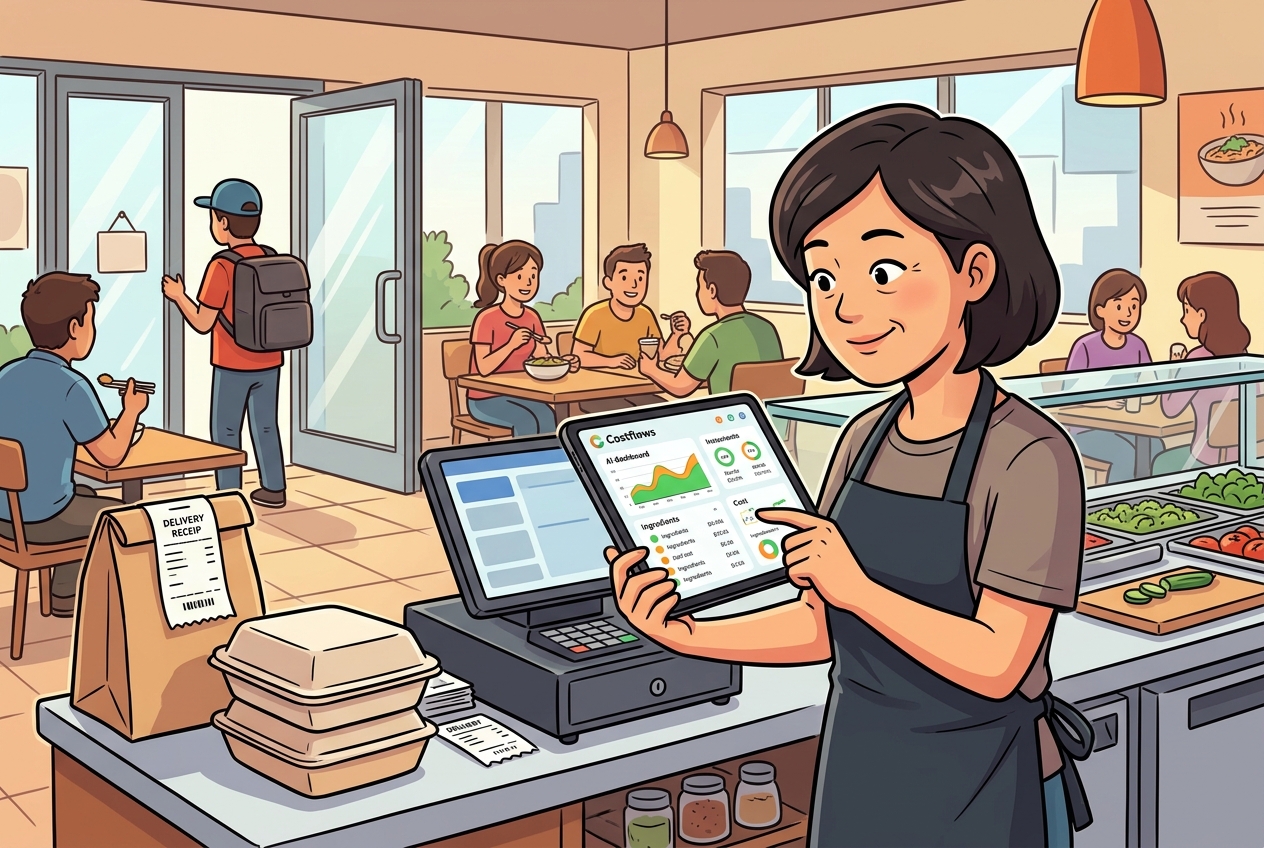
That’s why front-line data logs must fit right into their daily routines. Snap photos of invoices and verify counts instantly during receiving. Log prep usage or transfers on a phone during prep. Select a reason code and quantity on a tablet the moment food goes bad. Stocktakes shouldn't wait for back-office entry—they should be completed on the floor, in real-time. This stamps a precise time, logs the user, and keeps data accurate.
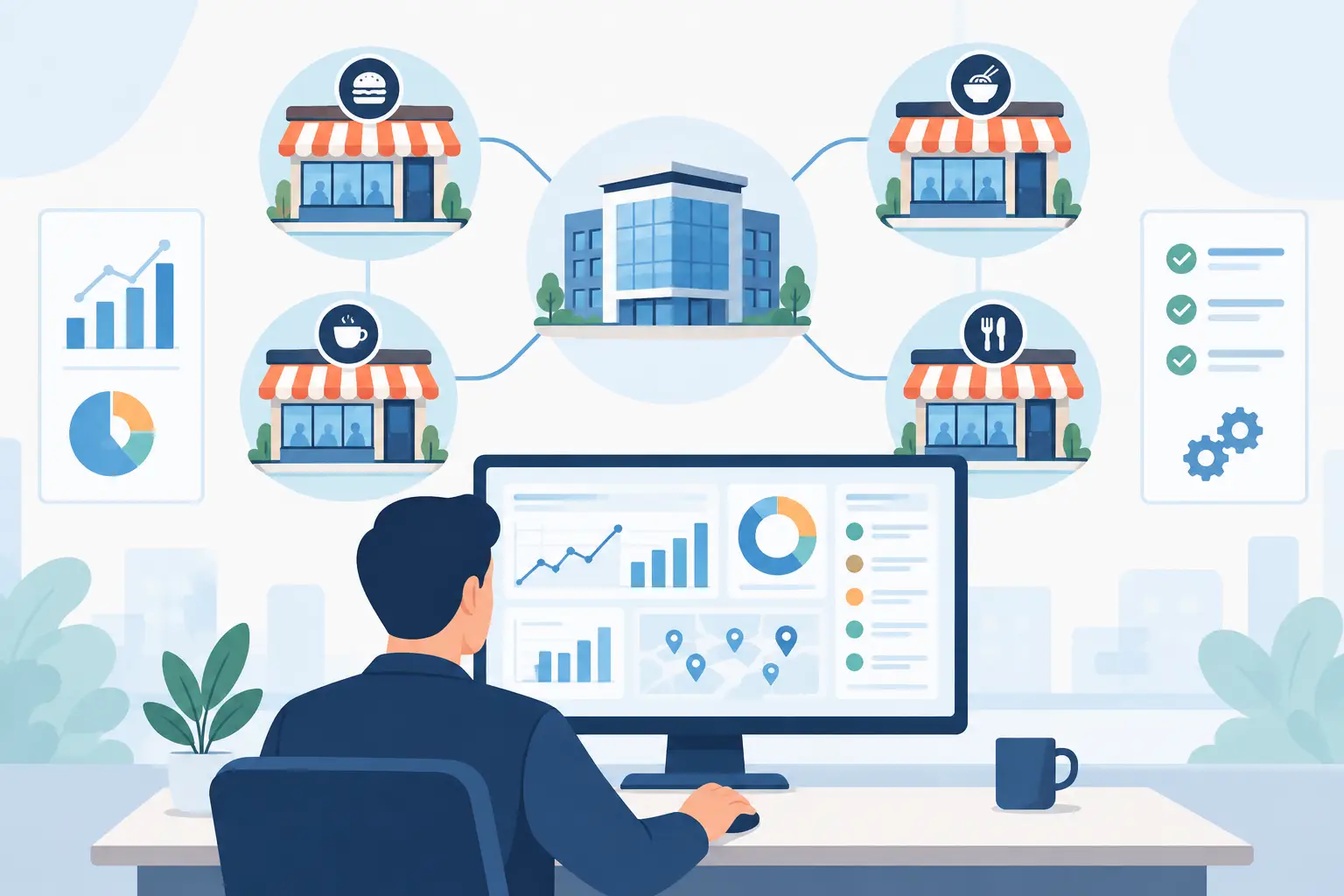
Naturally, different restaurant sizes require different approaches. A single-unit cafe doesn't need layers of approvals; they just need to cut manual typing and double-entry. A restaurant group, however, needs clear permissions, approvals, warehouse transfers, and standard item master sheets across locations. The principle remains the same: enter data once, share it across departments, rather than copy-pasting it over and over.
Why Excel Keeps Distorting Your Stocktakes
Excel's main problem isn't a lack of features; it's that it relies too heavily on humans. Typos, mismatched versions, broken formulas, invoices saved in desktop folders, and orders scattered across WhatsApp chats turn month-end into a treasure hunt. You spend administrative hours, but get zero real-time visibility and no audit trail.
This is especially true when purchasing costs fluctuate. If beef prices go up today, packaging changes tomorrow, and a supplier splits an invoice the next day—and these changes aren't immediately reflected in your stock and costs—your menu margin analysis fails. Management thinks a dish is profitable when it has actually fallen below target margins.
A more practical approach is connecting invoice data extraction, receiving, stocktakes, waste, and reporting into a single flow. F&B-focused cloud systems like Costflows use AI to capture invoice data instantly and sync it with your procurement, warehouse, wastage, and margin analysis. This doesn't just save bookkeeping time; it keeps your stocktakes from living in silos, allowing management to see price hikes, vendor performance, and variance on day one.
From Logging to Action: What Managers Actually Need to Look At
Once your data starts flowing, don't waste time looking at general numbers like "what did we use this month." Look for exceptions and variances.
Look at which ingredients have the highest variance rates, which locations are wasting the most, which shifts see the most spoilage, and which vendors fluctuate prices the most. Then, overlay this with sales, menu design, and promotions to figure out if the problem is procurement, kitchen prep, menu pricing, or operational habits.
Sometimes, cost increases are normal—like testing new recipes, commissary formula adjustments, or holiday prep. Short-term variances can be reasonable. But if the same variance shows up for three cycles, it’s not an accident. You need to adjust buying volumes, tighten approvals, update recipe standards, or switch suppliers.
Data isn't there to help you make the right decisions, faster.
Accurate Counts Equal Accurate Margins
Your restaurant's profitability won't improve just because your team works overtime on a month-end stocktake. The real difference comes when you connect stocktakes, wastage, purchasing, and sales into a trackable workflow. This makes it easy for the floor to log, easy for the back-office to verify, and easy for management to see. When every purchase, transfer, and waste log is accounted for, costing stops being a guessing game.
If you’re still using paper, Excel, and WhatsApp to run this chain, the issue isn’t your team's work ethic—it's that your tools aren't catching the errors. Start standardizing where data is most vulnerable: receiving, wastage, and stocktakes. Once your data is clean, you'll find that managing costs is no longer about month-end damage control, but a daily habit of protecting your margins.
.png)

訂閱最新消息
不要錯過任何餐飲的資訊