A crate of wilted greens, seafood tossed after expiring, prep sauces dumped at closing time—on the surface, these look like unavoidable kitchen waste. But in reality, food waste is almost always caused by broken handoffs between ordering, receiving, storage, prep, and sales forecasting.
A genuinely effective food waste reduction strategy isn’t about lecturing your kitchen crew to "be more careful." It’s about building a system where every single ingredient—from the purchase order to the dining table—has clear standards, digital records, and real ownership.
For restaurant operators, the biggest headache isn't a one-off batch of spoiled food. It's the small, daily leaks that compound into thousands of dollars by month-end. When your orders live across scattered WhatsApp chats, handwritten vendor invoices, paper delivery slips, and clunky spreadsheets, it’s impossible to pinpoint what went wrong. Did you over-order? Did the vendor short you? Did prep go overboard, or did portion sizes drift?
Stopping food waste doesn’t start with finger-pointing in staff meetings—it starts by turning your cost data into a traceable daily workflow.
1. Pinpoint Exactly Where the Leak Is Happening
Food waste typically happens across six core operational touchpoints: over-purchasing, receiving discrepancies, storage spoilage, prep excess, over-portioning on the line, and unrecorded waste.
Each of these bottlenecks requires a tailored fix—a once-a-month physical inventory count just won't cut it. If weekend covers fluctuate, your team might be ordering on autopilot using last week’s numbers. If beef usage consistently outpaces sales, you need to examine prep yield rates, line portioning, staff meals, or unlogged kitchen mistakes.
Set realistic waste thresholds for each ingredient category. Leafy greens, fresh fish, bakery items, and house-made sauces have completely different shelf lives and natural yield rates, so measuring them against a single blanket benchmark doesn’t work. Focus first on your high-cost, high-turnover, and perishable "A-list" ingredients. Fix what directly eats into your gross margins first.
Order Based on Sales Data, Not Gut Feeling
Over-purchasing is where food waste begins. When cooks order simply by eyeballing walk-in shelves without factoring in recent sales trends, reservations, weather, or upcoming promotions, they default to "just order extra to be safe." That so-called safety cushion might feel comfortable, but it dumps all the financial risk and spoilage pressure right onto the kitchen floor.
Every key ingredient needs clear ordering baselines: average daily usage, supplier delivery lead times, target safety stock, current on-hand inventory, and items nearing expiration.
The goal isn't an unrealistic zero-inventory model; it’s making sure your inventory turnover matches your actual sales velocity. Daily deliveries require smaller buffers, whereas long-lead or volatile specialty goods need calculated cushions.
Approval trails matter, too. When a prep cook requests supplies, the kitchen manager verifies stock against sales, and the buyer cuts the PO—these steps shouldn't happen through casual word-of-mouth or lost text messages. Managing purchase orders with a mobile app creates total visibility, helping multi-unit concepts and central kitchens keep buying disciplined and transparent.
2. Tighten Up Receiving and Storage—Your Most Overlooked Cost Gates
When delivery boxes land on your loading dock, matching the invoice total doesn't mean your costs are accurate. Receiving staff must verify counts, units of measure, catch weights, freshness, expiration dates, and actual unit prices on the spot.
Catch-weight items like seafood, steaks, and produce frequently arrive with short weights or off-spec cuts. If your team doesn't catch and credit these discrepancies right at the door, your restaurant absorbs that loss straight out of pocket.
Once checked in, items must be labeled and stored immediately. Labels should clearly show receive date, expiration date, batch, and opening date, following strict First-In, First-Out (FIFO) standards. This isn't extra busywork—it stops staff from grabbing the easiest box in front while older stock rots in the back. For high-ticket proteins and specialty goods, designate secure storage zones and require checkout logs so inventory doesn't vanish untracked.
Temperature control also needs a reality check. Just because the digital thermometer on the cooler reads 38°F doesn't mean internal food temps are safe. Constant door openings during peak dinner rush, hot pans packed straight into walk-ins, poor container seals, and raw-cooked cross-storage rapidly ruin shelf life. Have managers inspect airflow corners regularly, rather than just glancing at the exterior display.
Manage Prep in Batches and Pulls, Not "Just in Case"
Prep waste usually stems from a well-intentioned habit: kitchen staff making huge batches upfront so they don't get caught in the weeds during peak service. That works for shelf-stable signature staples, but it drives up waste on delicate sauces and perishables.
A smarter method is breaking prep into opening baselines, mid-shift replenishment pulls, and end-of-day wrap-up quotas. This keeps prep agile and tied to real-time seat turnover.
Track your batch yields, usable shelf life, and actual daily usage. If a signature dressing leaves a third of a tub unused every night, the staff isn't careless—the recipe batch size is simply too large, container sizing is off, or menu demand has shifted. Data logging isn't about micromanaging line cooks; it's about tweaking batch sizes and production cadence to fit real demand.
Standardized recipes are just as vital. Every dish needs explicit ingredient specs, units, net weights, trim yields, and exact portion guidelines. Vague instructions like "a pinch" or "a ladle" mean every cook plates a different cost. Digital scales, portion scoops, and visual plate build cards might seem like small details, but they instantly eliminate over-portioning and plate inconsistency.
3. Compare Theoretical vs. Actual Usage to Catch Hidden Leaks
Taking physical counts isn't just about printing an inventory valuation report. Its real value lies in comparing Theoretical Usage against Actual Usage (Variance Analysis).
- Theoretical Usage comes from your POS sales and recipe costing: if you sell 100 steaks, the system knows exactly how much beef should have left the building.
- Actual Usage comes from your beginning stock + purchases - ending physical count - logged waste and transfers.
The gap between the two is your margin leak.
A high variance doesn’t automatically mean theft. It frequently flags outdated recipe costs, unannounced supplier package changes, untracked prep scrap, or kitchen mistakes thrown away without being logged. The key is categorizing every discrepancy and setting an immediate timeline to fix it. If you only spot a massive variance during month-end bookkeeping, the chance to correct it has already passed.
Adopt tiered inventory counts based on item value. High-cost beef, seafood, wine, and expensive oils should be counted daily or every few days, while dry goods can stick to weekly or monthly cycles. Don't drown in endless counting—focus on making sure your numbers feed directly back into purchasing, kitchen prep, and financial decisions.
4. Connect Invoices, Inventory, and Recipe Margins in One Data Stream
Most restaurants already collect invoices, log inventories, and ring up POS orders—but these systems live in disconnected silos, forcing owners to reconcile numbers manually.
As a result, suppliers raise prices quietly for weeks before anyone notices. By the time menu prices adjust, margins have been eroded. When paper invoices are instantly converted into structured, line-item data, changes in raw ingredient costs update your recipe costing and profitability analysis automatically.
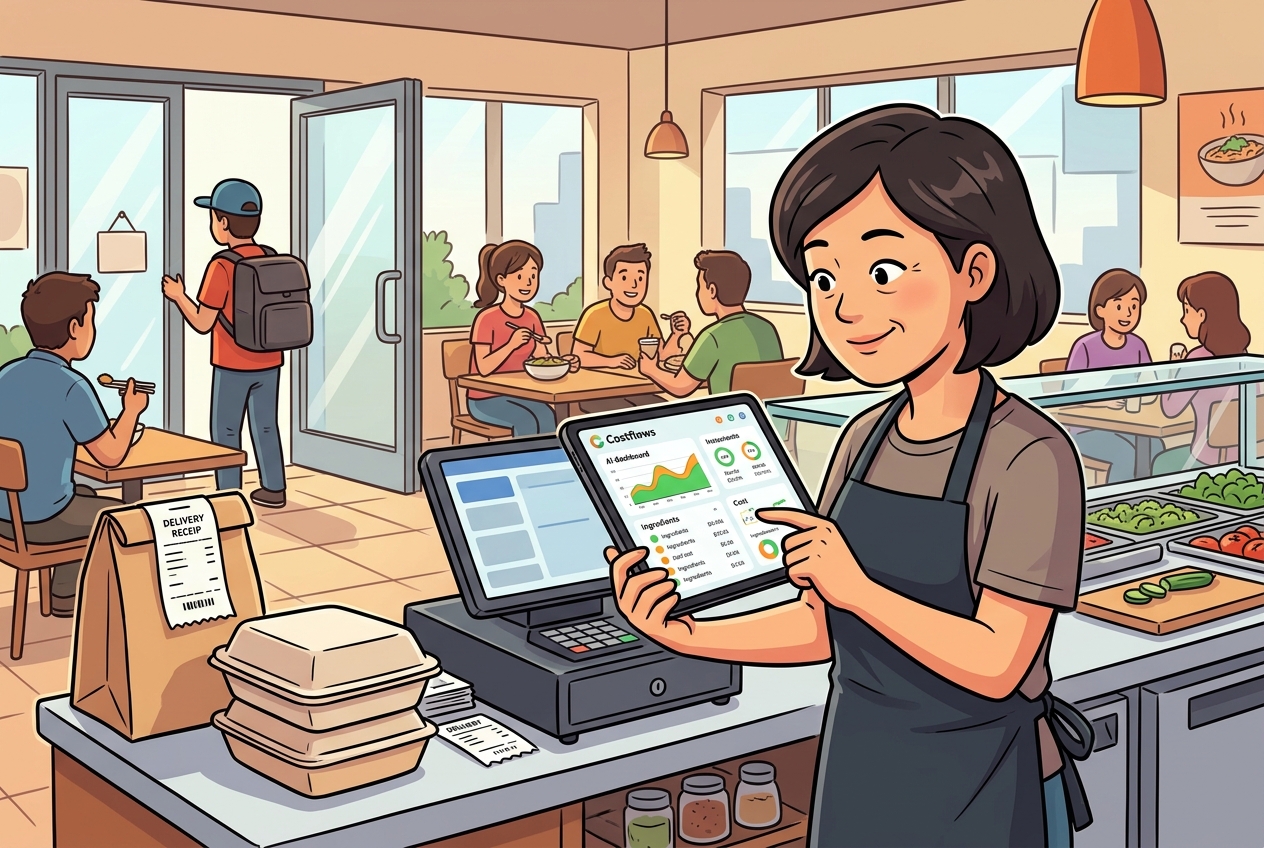
That’s where Costflows Intelligence comes in. Designed specifically for the high-pressure restaurant environment, Costflows lets your floor staff snap photos of paper bills, run stocktakes, and log waste directly from their phones. Powered by intelligent AI, it extracts itemized data across multiple languages—including English, Chinese, Japanese, and Thai—connecting purchasing, stock levels, recipes, and POS sales in real time.
When the price of cooking oil, beef, or seasonal produce spikes, you can immediately review vendor pricing trends, switch suppliers, adjust prep, or re-engineer plate margins—long before your accountant closes the books.
Data-driven management doesn't mean squeezing culinary creativity out of the kitchen. Chefs still need the flexibility to work with seasonal produce and maintain culinary quality. But exceptions should be documented and understood. When kitchen teams see that accurate inventory saves them from chaotic emergency orders and tedious manual stocktakes, they're much more eager to stick to the process.
Food waste won't vanish overnight with one big cleanup. It’s won or lost every day across every invoice, every prep batch, every delivery, and every plate. Pick your top three high-cost, high-waste ingredients today. Lock down dynamic par levels, verify deliveries at the door, and track your usage variances. Once your data shows you where the waste is going, you can finally turn saved food into real, bottom-line profit.
Frequently Asked Questions (FAQ)
Q1: How do restaurants calculate food waste using Theoretical vs. Actual (Variance) analysis?
A: Variance analysis reveals how much inventory was used compared to what should have been used based on sales:
- Theoretical Usage = Total Menu Items Sold (from POS) × Standard Recipe Ingredients.
- Actual Usage = Beginning Inventory + New Purchases - Ending Inventory - Logged Waste/Transfers.
The difference between the two is your variance (unaccounted waste, over-portioning, or shrinkage). Connecting POS data with invoice intelligence platforms like Costflows lets you calculate this automatically without spreadsheet headaches.
Q2: What is the most effective first step to cut restaurant food waste quickly?
A: Start with an ABC inventory audit focusing strictly on your top 20% highest-cost and most perishable items (like prime cuts, fresh seafood, and dairy). Set data-driven par levels, enforce mandatory weight checks at receiving, and implement strict FIFO labeling for just these key items. Tackling this small group first typically yields noticeable margin improvements within two to four weeks.
Q3: How does an AI restaurant management platform like Costflows beat traditional spreadsheets?
A: Spreadsheets require hours of tedious manual data entry, are prone to human error, and deliver outdated numbers weeks after price hikes occur. Costflows Intelligence eliminates manual entry by using AI to instantly scan paper invoices across multiple languages down to the line item. It automatically syncs real-time cost changes with your recipes, updates inventory levels, and integrates directly with accounting tools like QuickBooks and Xero—giving you real-time visibility and control right in your pocket.
.png)

訂閱最新消息
不要錯過任何餐飲的資訊