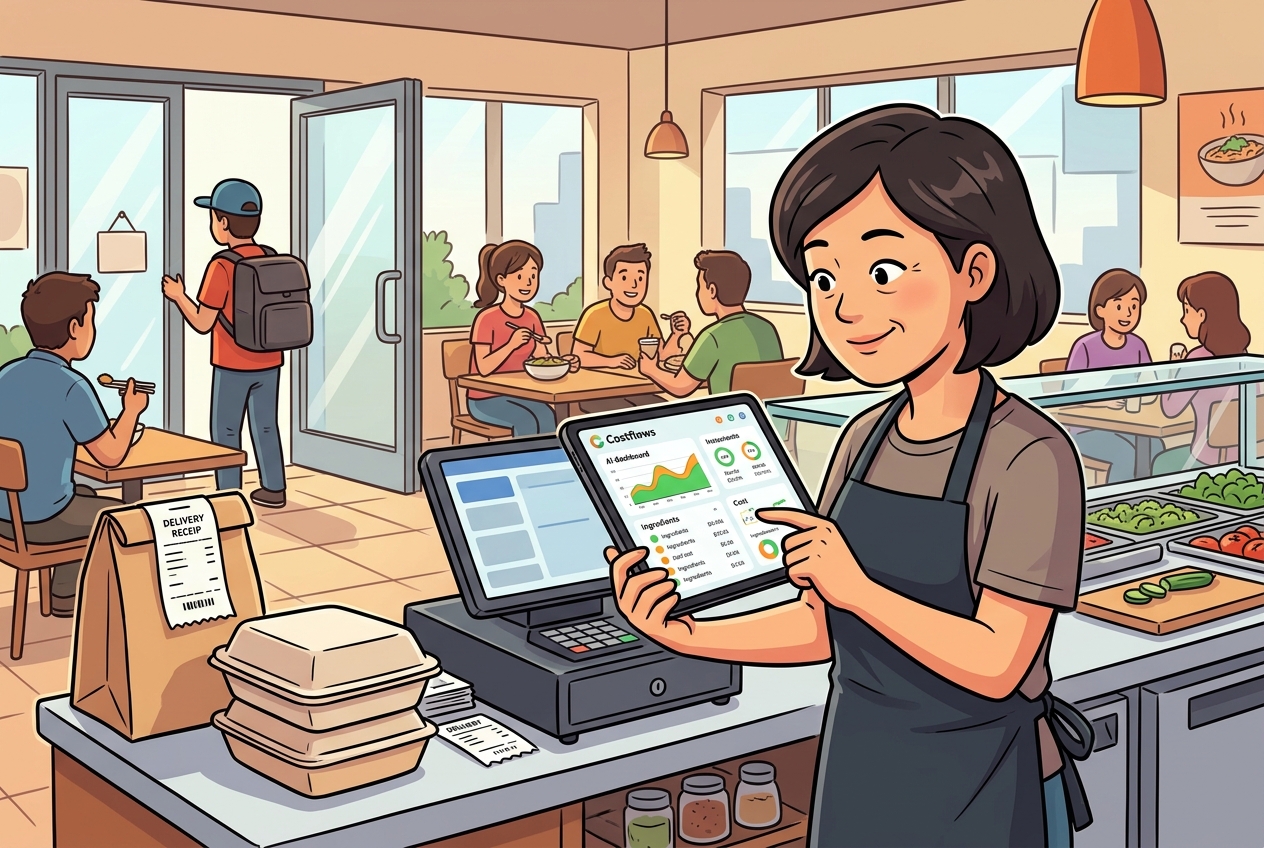
If your morning starts with WhatsApp supplier quotes, your afternoon is spent updating Excel spreadsheets, and your evening is dedicated to re-entering handwritten invoices for your accountant—you’re not alone. This is the "inefficiency loop" most restaurants are stuck in. When comparing Procurement Apps versus ERP systems, don’t get distracted by who has the longest feature list. Look for the system that bridges the gap between ordering, inventory, and profit so your front-line staff can stop doing double work and your management can see the numbers before it’s too late.
Procurement App vs. ERP: Start With the Right Problem
Many operators ask, "Should I skip the app and just go straight to an ERP?" If you look only at the software category, you’ll likely make the wrong choice. In the restaurant business, it isn’t about how "big" your system is—it’s about whether procurement data hits the system in real-time, how effectively you track inventory, and whether you can pinpoint exactly why your food cost spiked this week.
If your pain points are messy ordering, scattered invoices, and opaque supplier pricing, a procurement app will likely yield faster results because it solves the "last mile" problem at the restaurant level. Conversely, if you are managing multiple legal entities, complex payroll, multi-departmental approvals, and total financial consolidation, then an ERP becomes essential. The mistake many make is forcing a heavy ERP on a restaurant team that hasn’t yet standardized its basic procurement workflow—the result is usually a system that sits empty while staff continue working in Excel.
Why Procurement Apps Win on Execution
A restaurant procurement app is designed for the high-pressure, on-the-go environment of a kitchen. Managers can place orders via mobile, chefs can request urgent stock, and receiving is done by simply snapping a photo of the delivery note. It puts the control back into the hands of the people actually running the kitchen.
For single outlets or smaller chains, the value isn't just "having an app"—it’s transparency. When every order has a time-stamped record of the supplier, item, and price, you can finally control costs rather than just reviewing a report that tells you prices rose three weeks ago.
Why ERPs Win on Corporate Structure
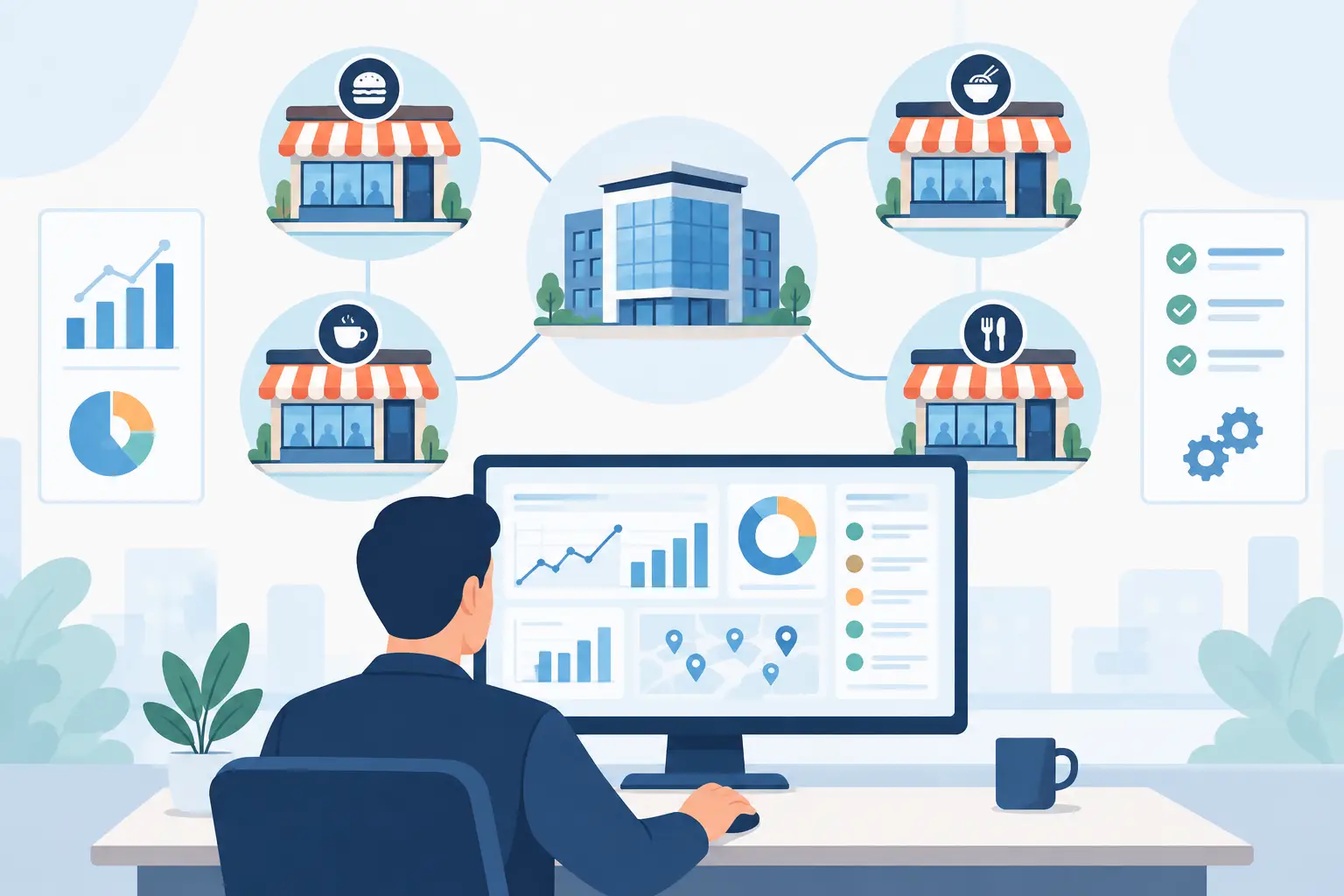
An ERP isn't "bad" for restaurants; it’s just better suited for teams with deep organizational complexity. If you are managing multiple brands, industrial-scale central production, and rigorous financial consolidation, the institutional framework of an ERP is invaluable.
However, the "ERP trap" in restaurants is real:
- Front-line resistance: If it’s too complex, the kitchen won’t use it.
- Design mismatch: Many ERPs aren’t built for the high-frequency, fragmented nature of food purchasing.
- Slow deployment: If your master data isn't perfect, you’ll spend months implementing a system that requires a dedicated IT team just to keep it running.
It’s Not About Features, It’s About Deployment Speed
In the restaurant business, decisions happen during service. You need to order when stock runs low and verify prices when the delivery truck is at the back door. If a system requires a desktop computer, a long approval chain, or a special data entry clerk, your staff will go right back to WhatsApp and paper receipts.
If your goal is to clean up your procurement and invoice management within 30 days, an app is usually a safer bet. It builds the habits of consistency first, and you can always connect it to your accounting system later. In fact, the best-run groups use a mobile app as the "data gateway" and sync it to their ERP. That way, the front-line stays fast, and the back-office stays compliant.
The 4 Metrics That Actually Matter
When choosing, evaluate based on these four indicators:
- Data Entry Efficiency: If it still requires manual typing, the system is already obsolete.
- Real-time Price Tracking: Can you see price fluctuations the moment an invoice is scanned?
- Inventory & Recipe Linkage: If the order doesn't update your inventory and recipe costs, it’s just a glorified notepad.
- Integration: Does it talk to your POS and accounting software? If data lives in silos, you don’t have a management tool—you have a list of disconnected facts.
The Bottom Line
If you are a single unit or a small group still doing manual reconciliation, start with a solution that prioritizes mobile efficiency. If you are a larger chain with a central kitchen, you need an architecture that bridges the front-line execution with the back-office compliance.
Solutions like Costflows succeed because they recognize that restaurant tech isn't about "more features"—it’s about standardizing the messy, high-speed reality of a kitchen. If your team won't use it because it’s too slow, it’s not the right tool. When your data is accurate and captured at the source, your profits will follow.
.png)

訂閱最新消息
不要錯過任何餐飲的資訊